Rheophilic Cyprinid Biology & Heavy River Feeder Masterclass · Volga 2026 Encyclopedia
Vimba Bream (Zanthe)
Vimba vimba (Linnaeus, 1758)
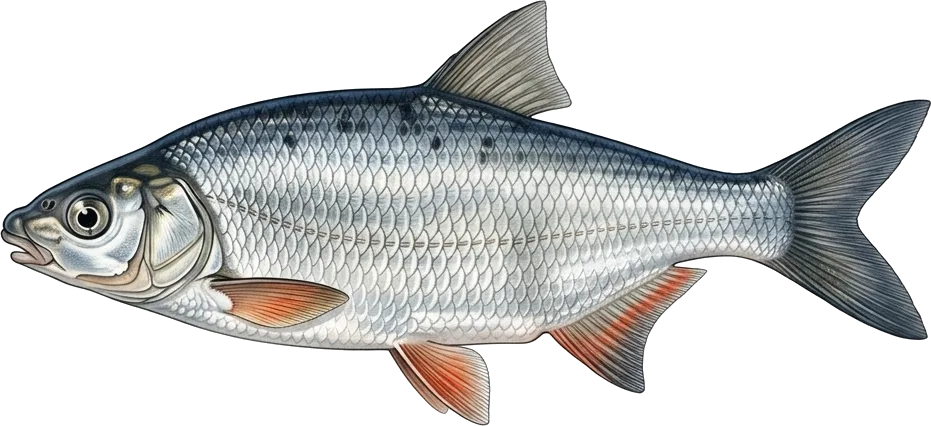
Vimba Bream (Zanthe) Vimba bream (Vimba vimba, or zanthe) is a rheophilic migratory cyprinid fish inhabiting clear gravel-bottomed river currents across Europe and the Baltic/Black Sea basins. The species is distinguished by an overhanging fleshy snout, ventral mouth, single-row 5-5 pharyngeal teeth, and weight up to 3 kg. Anglers target vimba trotting bottom rigs with worms, maggots, and caddis larvae.
Vimba demands uncompromising heavy river tackle: 3.9m Heavy Feeder (120–150g rating), clawed gravel feeders, stiff 0.14–0.16mm fluorocarbon hooklinks, and juicy redworm clusters tipped with caddis larvae or maggots.
- ✅ You want to definitively distinguish vimba (zanthe) from common nase and bream by snout morphology and mouth profile.
- ✅ You want to master heavy feeder angling on fast gravel river rapids deploying 90–130g claw feeders.
- ✅ You need proven baits: lively redworm bunches, caddis larvae (caseless & cased), boiled wheat, and aged cheese dips.
- ✅ You want to explore the science of vimba anadromy, benthic epilithic grazing, and spectacular nuptial color changes.
- ✅ You want to master vimba bream mechanics and rapid-current quests in 'Volga 2026'.
Ichthyology & Rheophilic Adaptations: Biological Profile of Vimba vimba
Vimba bream (*Vimba vimba*) is a specialized benthic rheophile possessing unique anatomical adaptations:
The snout is elongated, blunt, and protrudes forward as a fleshy cartilaginous hood overhanging the mouth. It protects delicate oral tissues while the fish turns over gravel seeking caddis larvae.
Positioned strictly on the ventral side of the head, the crescent-shaped mouth features fleshy lips adapted for vacuuming benthic epilithon and scraping aquatic insect larvae off boulders.
During spring spawning runs, males undergo an extraordinary transformation: the dorsum and flanks turn jet-black, the belly and anal fin blaze fiery crimson, and pearlescent tubercles crown the head.
The body is elongated, robust, and muscular with a thick caudal peduncle, enabling vimba to effortlessly hold position and forage inside the fiercest river currents.
Vimba Bream vs Common Nase vs Common Bream: Identification Guide
Comparative anatomical guide for three benthic rheophilic species:
- Snout: FLESHY, CARTILAGINOUS, heavily overhanging mouth.
- Mouth: crescent-shaped, inferior, soft rounded lips.
- Anal fin: elongated (16–22 branched rays).
- Color: dark slate-grey/black back, pink-orange belly.
- Size: 30–45 cm (400–1,200g, records to 1.8 kg).
- Mouth: TRANSVERSE STRAIGHT SLIT (lower lip encased in sharp horny blade).
- Peritoneum: PITCH BLACK (diagnostic marker of nase).
- Snout: blunt cartilage, but not overhanging as a hood.
- Anal fin: short (10–12 rays).
- Size: 25–40 cm (300–800g).
- Body: very deep, compressed with humpback profile.
- Snout: blunt, lacking protruding fleshy overhang.
- Mouth: extends into a long vacuum tube.
- Scales: coarse with thick slippery mucus.
- Size: 1.0–4.5+ kg.
Mechanics of the Violent Rapid Strike & Hookset
Facing upstream in boiling rapid currents, the vimba pod hunts scouring food. Spotting a juicy worm cluster tipped with caddis, the fish clamps the bait to the gravel with its fleshy lips and bolts. On a stiff 3.0–4.0 oz carbon tip, this detonates as an explosive drop-back or a violent rod-slamming surge.
Strike immediately with authority. Hooked, vimba leverages the raging current, bracing its broad body broadside against the gravel floor with frantic cross-river dashes. Strong winching power on a Heavy blank steers the powerhouse fish clear of razor-sharp boulders!
Seasonal Habitats: Gravel Rapids, Rock Ledges & Current Seams
Vimba is a migratory rheophile locked to oxygen-rich river rapid zones:
🌱 Spring (Pre-Spawn River Ascent): Massive schools run upriver into fast gravel runs (1.5–3.5m depths). Bites aggressively all day on redworms and caddis larvae.
☀️ Summer (Rapid Current Runs): Settles along fast gravel chutes, tailraces below weirs, and gravel spits (2.0–5.0m). Peaks at dawn (4:30–8:30 AM) and dusk.
🍂 Autumn (Deep Gravel Shelf Staging): Migrates into deeper 5.0–9.0m channel drop-offs with firm clay-gravel substrate. Feeds steadily during warm midday hours.
❄️ Winter (Deep Rocky Glides): Rests along 6.0–12.0m deep rocky reaches near wintering pits. Caught on heavy flow jigs baited with bloodworms and earthworms.
Vimba Baits: Redworms, Caddis Larvae, Steamed Wheat & Cheese Additives
1. Top Animal Baits
Cluster of 3–4 lively redworms threaded in loops; caddis larva (shitik)—the undisputed delicacy; big red/white maggots; fat bloodworm bunches.
2. Plant Offerings
Steamed hard wheat grains scented with anise; garlic-dusted pearl barley; stiff dough laced with grated parmesan cheese.
3. Cheese & Savory Dips
Aged cheese dip sprays, crushed garlic, coriander, and krill meal. Pungent savory notes stimulate instant aggressive takes on current.
4. Heavy Bound River Groundbait
Dense sticky mix based on maize meal and heavy biscuit, weighted with 30% 2–4mm river gravel and bentonite clay, loaded with chopped worms and live maggots.
Tackle: Heavy River Feeder 3.9m, Claw Cages & Stiff 0.16mm Hooklinks
Boiling river flow demands uncompromising tackle stability and structural strength:
Heavy / Extra-Heavy Feeder 3.9–4.2m (120–160g Rating)
Fast-action heavy blank with 3.0–4.0 oz carbon quivertips. Size 5000–6000 power winch reel with low 4.7:1 gearing to muscle heavy leads against roaring current.
Claw / Vampire Lead Feeders (90–130g)
Metal wire cage feeders equipped with protruding bottom anchor claws, locking firmly into gravel rapids against relentless current pressure.
Stiff 0.14–0.16mm Fluorocarbon Hooklink (60–90cm)
Abrasion-resistant stiff fluorocarbon that resists mussel abrasion and current spin, armed with heavy-wire forged Gamakatsu/Owner hooks #10–12.
Debunking Common Vimba Myths
Fact: They are distinct species: vimba has a fleshy overhanging snout and crescent mouth; nase features a transverse mouth with a horny blade and pitch-black belly cavity.
Fact: The pitch-black back and flaming orange-red belly represent the natural nuptial dress worn by breeding males during spring spawning runs.
Fact: Vimba is an obligate rheophile living exclusively in swift, oxygen-rich rapids over clean gravel and rock substrates.
Scientific Research on Vimba vimba
'The vimba, or syrt, ranks among the most prized and flavorful fishes... Distinguished by a remarkable overhanging snout, it inhabits swift stony rivers and undertakes lengthy spring migrations.'
'Vimba vimba exhibits an anadromous life strategy. The cartilaginous rostrum and crescent inferior mouth are specialized for benthic epilithon scraping and trichopteran extraction in flows up to 1.5 m/s.'
'Vimba vimba: maximum recorded weight 3.0kg, typical weight 400–1,200g, length 50cm, lifespan 15 years. Single-row 5-5 pharyngeal teeth are adapted for crushing small mollusk shells.'
4 Tactical Rapid-River Feeder Strategies for Vimba
Deploy 100–120g claw wire cages. The rig must anchor dead-still into gravel rapids—current must not roll the bait away from the strike corridor.
Thread 3–4 redworms in undulating loops, locked with a caddis larva or maggot, and dip the payload into aged cheese attractant on every cast.
Blend 30% washed 2–4mm river gravel into the sticky feed. Heavy pebbles drop immediately onto the rapid floor, pinning a dense feeding lane.
Angle the rod vertically on hookset, pumping vimba swiftly into mid-water to prevent it from wedging the line under jagged riverbed rocks.
Seasonal Matrix: Depths, Optimal Times, Baits & Rigs
| Season | Peak Feeding Time | Depth Zone | Top Baits | Tackle System |
|---|---|---|---|---|
| Spring (April – May) | 06:00 – 19:00 (All-day spawning run) | 1.5 – 3.5 m (Roaring gravel rapids) | Redworm cluster, caddis, maggots | Heavy 3.9m feeder (120g), Bolognese |
| Summer (June – August) | 04:30 – 08:30 & 18:30 – 21:30 (Dawn/Dusk) | 2.0 – 5.0 m (Gravel chutes & tailraces) | Cheese-dipped worms, steamed wheat | Heavy feeder, 100g claw cages |
| Autumn (Sept – Nov) | 10:30 – 16:00 (Warm midday) | 5.0 – 9.0 m (Deep rocky channel shelves) | Worm bunch, fat bloodworms, shitik | Extra-Heavy 4.2m feeder (140–160g) |
| Winter (Ice Season) | 10:00 – 15:00 (Sunny winter days) | 6.0 – 12.0 m (Deep rocky glides) | Heavy flow jig baited with worm | Heavy flow ice rod, 0.16mm |
Angling Diagnostic: Identify What's Impeding Your Vimba Catch
Select the symptoms you are experiencing for instant technical adjustments:
Vimba Bream in 'Volga 2026' Simulator
In 'Volga 2026', vimba bream is simulated with authentic roaring-rapid mechanics, explosive quivertip drop-backs, ferocious current battles, and trophy black nuptial specimens. Weight spectrum spans 300 to 1,600 g. Inhabits fairway rapids, gravel chutes, and rocky points.
Key in-game locations: 'Boiling Rapid', 'Stony Headland', 'Volga Expanses', 'Sandbar Spit'.
Vimba crowns the rapid tournament questline ('Snouted Nomad of the Volga', 'Secret of the Cheese Dip', 'Nuptial Fire of the Rapids'), unlocking 150g Heavy feeders and claw cages.
Frequently Asked Questions About Vimba Bream
What is the difference between vimba and syrt?
Vimba and syrt are identical fish (*Vimba vimba*). 'Syrt' is the traditional regional name in Northwestern Russia and the Baltic basin, while 'Vimba' / 'Rybets' is used across Volga, Don, Dnieper, and Black Sea basins.
How do you distinguish vimba from common nase?
Key differences: 1) Snout: vimba has a fleshy overhanging hood (nase has a blunt cartilage); 2) Mouth: vimba has a crescent mouth (nase has a straight transverse slit with a horny blade); 3) Belly cavity: nase has a pitch-black peritoneum (vimba has a pale membrane).
What is the single most effective bait for river vimba?
A cluster of juicy redworms pinned by a live caddis larva (shitik) or maggot, dipped in aged cheese attractant on a stiff 0.15mm hooklink.
Why do male vimba turn jet-black in spring?
This is the nuptial dress triggered by reproductive hormones prior to spawning: the back turns ebony-black, belly blazes orange-red, and head tubercles develop for courtship.
Where should you search for vimba on rivers in summer?
In swift, oxygenated flows: over gravel and stony rapids, along gravel spits, behind bridge stanchions, and in tailraces below dams at 2.0–5.0m depths.
Authoritative Ichthyological Sources & Literature: FishBase — Vimba vimba Biological Summary · IUCN Red List of Threatened Species — Vimba vimba · Л. П. Сабанеев — «Жизнь и ловля пресноводных рыб: Сырть,_рыбец» (Викитека) · Институт биологии внутренних вод им. И. Д. Папанина РАН (ИБВВ РАН)
Prepared by the Volga 2026 Editorial Board in strict adherence to aquatic biology and sport angling standards. Volga 2026 Editorial Methodology.