Ichthyology & Angling Practice · Volga 2026 Encyclopedia
Crucian Carp
Carassius carassius (Золотой) · Carassius gibelio (Серебряный)
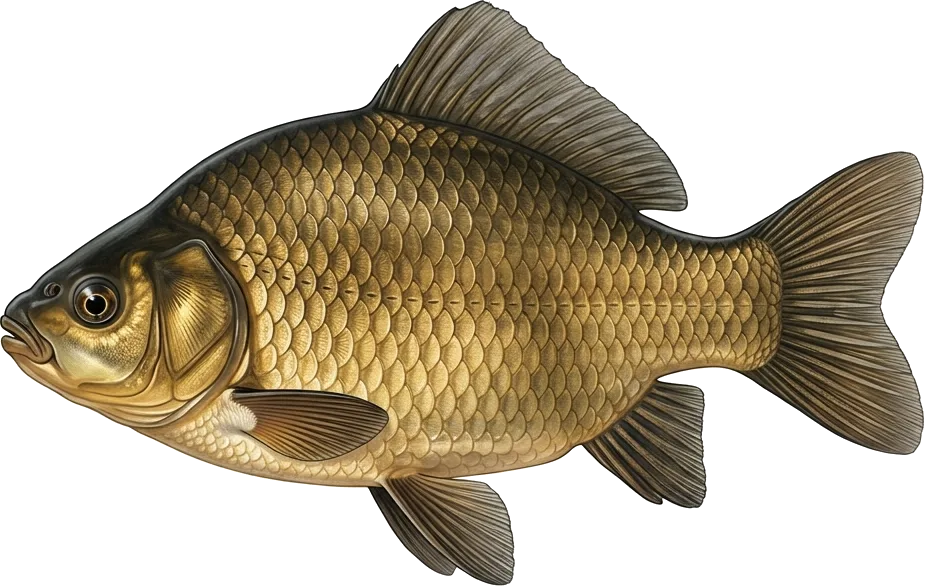
Crucian Carp Crucian carp (golden Carassius carassius and silver Carassius gibelio) is a freshwater cyprinid fish native to Eurasian slow rivers and eutrophic ponds. The species features extraordinary anoxia tolerance via metabolic ethanol synthesis, single-row 4-4 pharyngeal teeth, and maximum weight of 3.5 kg. Targeted with float and feeder rigs using worms, maggots, and dough.
If these frustrations sound familiar, you have encountered classic crucian temperament. Crucian is neither dull nor lazy: it is an adaptive marvel of freshwater ecology. Understanding its feeding mechanics, sensory organs, and metabolic rhythms turns baffling blanks into consistent success.
- ✅ You want to solve the mystery of inactive bites when crucian bubbles all around yet refuses standard baits.
- ✅ You need precise tackle tuning: balancing the float for lift bites, choosing delicate leaders (0.10–0.12 mm) and micro-hooks.
- ✅ You seek proven bait and groundbait recipes: from semolina dough and anise paste to garlic-scented worms.
- ✅ You play Volga 2026 and wish to master the biological patterns powering the in-game mechanics.
Ichthyology & Survival: The Biochemical Wonder of Stillwaters
Crucian carp possesses physiological adaptations unmatched by most temperate freshwater fish. It thrives in shallow oxbows, stagnant ponds, and waters prone to severe winter anoxia.
Under zero oxygen conditions, crucian converts metabolic lactate into ethanol and releases it via the gills, avoiding lactic acidosis and surviving months buried in frozen mud.
A dense network of taste buds across the lips and mouth allows crucian to pinpoint bloodworms under 10 cm of silt. Single-row pharyngeal teeth grind plants and crustaceans.
The lateral line senses low-frequency micro-vibrations (1–25 Hz). Crucian instantly distinguishes the gentle fall of a natural larva from the heavy thud of a lead sinker.
Digestive enzyme activity drops sharply below 10°C. In chilly spring and autumn waters, crucian ignores bulky carbohydrates, responding strictly to tiny doses of animal protein.
Golden vs Silver Crucian: Key Differences & Identification
Two primary species of the Carassius genus inhabit Eurasian waters. Their biology, reproductive strategies, and habitat preferences differ significantly.
- Body shape: deep, high-backed, almost disc-like and laterally compressed.
- Coloration: rich bronze-gold, coppery sheen with reddish-tinted fins.
- Scales: smaller, smooth (32–35 scales along the lateral line).
- Habitat: quiet heavily vegetated forest lakes, peat bogs, oxbows.
- Conservation: vulnerable, increasingly displaced by silver crucian.
- Body shape: more elongated and streamlined than golden crucian.
- Coloration: silvery-grey to greenish-steel with dark grey fins.
- Scales: larger and coarser (27–31 scales in lateral line).
- Reproduction: capable of gynogenesis (sperm from other cyprinids activates eggs).
- Habitat: rivers, reservoirs, open ponds, gravel pits; aggressive feeder.
- Body: thick, heavy-set profile coated in dense protective slime and tiny scales.
- Coloration: dark olive-green with bright red ruby eyes.
- Barbels: one pair of tiny barbels at fleshy mouth corners.
- Habitat: silty weedbeds sharing the exact biotope with crucian.
- Fight: immense low-geared torque diving directly into lily root balls.
Bite Mechanics: Why the Float Lifts and Lays Flat
Crucian feeds at a 45–60° angle to the bottom. Once it locates food, it inhales the bait with a localized water suction pulse, tests its texture, and levels out horizontally.
As the fish levels out, it lifts the micro-dropper shot (подпасок). The float loses its trim, rising smoothly or falling onto its side. If the fish senses unnatural resistance, it instantly expels the hook.
Locating Crucian: Seasonal Swim & Depth Guide
The annual lifecycle of crucian carp closely follows water temperature, dissolved oxygen levels, and the growth of submerged aquatic weeds.
🌸 Spring (April – May): Crucian surges onto shallow flats (0.4–1.2 m) warmed by early sunshine. Look around decaying reeds, shallow oxbow bays, and backwaters. Prime window: 10:00 to 16:00 during sunny calm spells.
☀️ Summer (June – August): Large specimens seek cover in dense lily pads, pondweed beds, and willow shade. Peak feeding happens during dawn twilight (04:30–07:30) and dusk (19:30–22:00). Stifling nights offer great action on the weed margins.
🍂 Autumn (September – October): Dying weed and cooling water drive crucian out to 2.5–4.5 m depths around channel shelves and depressions. Feeding windows condense into brief spells during warm midday hours.
❄️ Winter (November – March): In shallow silty ponds, crucian buries into bottom mud and enters torpor. However, in oxygenated reservoirs and gravel pits, silver crucian frequently bites through the ice on micro-jigs tipped with bloodworm.
Crucian Menu: Baits, Scents & Groundbait Recipes
Animal Baits (Spring, Autumn & Tricky Days)
Red dung worms (boosted with crushed garlic or fresh mint), white/red maggots (fished in clusters of 2–3 or threaded singly), and juicy bloodworms. On deep silt, a bloodworm + maggot cocktail is king.
Plant Baits (Summer Warm Waters)
Semolina 'boltushka' paste (extruded via syringe), anise and garlic doughs, thermos-steamed pearl barley rolled in fine breadcrumbs, sweetcorn, and yellow pea paste.
Attractors & Liquid Scents
Anise, fresh garlic, dried dill, coriander, caramel, and honey. Cardinal rule: in cold water use subtle savory/spicy scents; in warm water switch to sweet and fruity notes.
Groundbait Strategy: Keep It Light & Sifted
Crucian groundbait must be finely milled, dark in colour, and low in food value. Blend with 30–50% lakebed soil or molehill earth to create an enticing scent cloud without sating the fish.
Tackle & Rigs: Three Proven Methods
Crucian angling success is 80% down to rig delicacy and selecting the right tackle for the shoreline profile.
1. Delicate Pole & Waggler Float Tackle
The primary tool for reed gaps and lily clearings. A 5–7 m lightweight pole, 0.12–0.14 mm main line, 0.09–0.11 mm fluorocarbon hooklength, and a slim 0.8–2.0 g quill or needle float with stepped shotting.
2. Picker & Flat-Method Feeder
Ideal for 20–45 m range over soft silty beds. The flat-bottomed method feeder rests on top of the silt without sinking, while a short 7–10 cm hooklink keeps the bait centered in the feed burst.
3. Summer Side-Nod Jigging
Pinpoint sniper approach for snaggy pockets and 20x20 cm weed holes inaccessible to floats. A stiff 6–8 m rod, responsive side-mounted spring indicator, and a micro lead/tungsten jig tipped with bloodworm.
Debunking Widespread Crucian Angling Myths
❌ False. In spring and early summer, the strongest bite on the shallows happens between 11:00 and 15:00 as sunshine warms the water. Overcast warm days produce steady feeding all day.
❌ Hazardous myth. While pungent foreign odors may spark curiosity in starved stunted fish, petrochemicals ruin swims, scare wary specimens, and pollute the ecosystem. Natural garlic and anise are far more effective.
❌ Only true for tiny palm-sized fish. Specimen crucian (400 g to 1.5 kg) is intensely cautious: the moment it detects heavy line drag or a bulky hook, it drops the bait instantly.
Scientific Evidence: Field Studies & Research
“The crucian is remarkably hardy... under adverse conditions it buries into bottom mud up to half a meter deep, surviving the total freeze-up or desiccation of the water body for months.”
“Silver crucian populations in the Volga basin often consist entirely of females capable of gynogenetic reproduction stimulated by sperm from related cyprinid species.”
“Carassius carassius displays acute olfactory sensitivity to amino acids such as glycine, alanine, and glutamine, driving its intense feeding response to animal and fermented protein baits.”
4 Practical Tactics for Fickle Crucian
If the float trembles without a firm lift, drop leader diameter from 0.14 to 0.10 mm, switch to a #16–18 hook, and present a single bloodworm or tiny dough bead.
Combine animal and cereal baits: worm tip + steamed barley, maggot + bloodworm, or a buoyant micro-foam ball with soft semolina paste to lift clear of bottom silt.
Instead of heavy bombardment, introduce a walnut-sized ball of dark groundbait every 15–20 minutes directly over the float. The soft splash triggers inquisitive fish.
Place your rig within 5–10 cm of the reed wall or lily canopy. Crucian seldom ventures onto exposed open water more than a meter away from safe cover.
Seasonal Tactics & Bait Selection Matrix
| Season / Period | Prime Hours | Depth & Swims | Top Baits | Tackle & Rig |
|---|---|---|---|---|
| Early Spring (April) | 11:00 – 16:00 | 0.5 – 1.0 m, warm shallows | Bloodworm, small worm | Pole 5m, 0.10 mm line |
| Late Spring (May) | 07:00 – 18:00 | 0.8 – 1.5 m, reed margins | Maggot, semolina, worm | Float, side-nod jig |
| Summer (June – August) | 04:30–08:00 / 19:30–22:00 | 1.2 – 2.5 m, lily pockets | Barley, anise dough, corn | Waggler, pole, flat feeder |
| Autumn (Sept – Oct) | 12:00 – 16:30 | 2.5 – 4.5 m, channel shelves | Bloodworm bunch, garlic worm | Picker, method feeder |
Interactive Angler Diagnostics Check
Which crucian angling hurdle do you encounter most often?
Crucian Carp in Volga 2026 Simulation
In Volga 2026, crucian carp features as a quintessential bottom dweller weighing between 0.08 and 2.6 kg. It fights with stubborn downward pressure and reacts sensitively to bait choice and water disturbance.
Core in-game waters: 'Willow Crucian Pond' (Village Ponds), 'Silver Birches' (Oxbow), 'Quiet Monastery', and 'Railway Pond'.
Associated quest: 'Willow Crucian' from Yura Karta (catching 6 specimens on delicate tackle).
Frequently Asked Questions
Why does crucian carp lift the float onto its side during a bite?
Crucian takes bait off the silt with its body tilted downward, then straightens horizontally, lifting the micro-dropper shot off the bottom. Relieved of this weight, the float rises or lays flat. Strike during the steady lift or as the float begins to glide.
What is the most versatile crucian bait across all seasons?
Red dung worms and bait cocktails (maggot + bloodworm in spring/autumn, maggot + steamed barley or semolina dough in summer) remain undisputed champions. Plant baits excel once water surpasses 15°C.
How do you fish for crucian over deep, soft lakebed silt?
The primary risk is hookbaits sinking into silt under heavy tackle weight. Use ultralight 0.8–1.2 g floats, position bulk weight 35–40 cm high, and fish light baits (semolina paste, puffed barley, or foam-lifted maggots). For ledgering, rely on flat method feeders.
What is the biological difference between golden and silver crucian carp?
Golden crucian (Carassius carassius) is a native deep-bodied species with bronze scales and high peat-anoxia tolerance. Silver crucian (Carassius gibelio) has an elongated silver body, faster growth rate, and can reproduce via gynogenesis using sperm from other cyprinid species.
Can crucian carp survive being frozen into solid ice and mud?
Yes. Crucian buries up to 50 cm into bottom silt where temperatures hover around 0–2°C even when shallow ice hits the bottom. Its unique ethanol metabolism and cold-shock proteins protect cell membranes during extended torpor.
Scientific databases and references used for editorial verification: FishBase: Carassius carassius · FishBase: Carassius gibelio · ИБВВ РАН: Ихтиология пресных вод · CABI Digital Library: Carassius auratus & gibelio
Prepared by the Volga 2026 editorial board. Check local recreational fishing regulations and spawning bans with your regional fisheries authority. Volga 2026 Editorial Methodology.