Extremophile Cyprinid Biology & Micro-Float Peat Angling · Volga 2026 Encyclopedia
Mud Minnow
Rhynchocypris percnurus (Pallas, 1814)
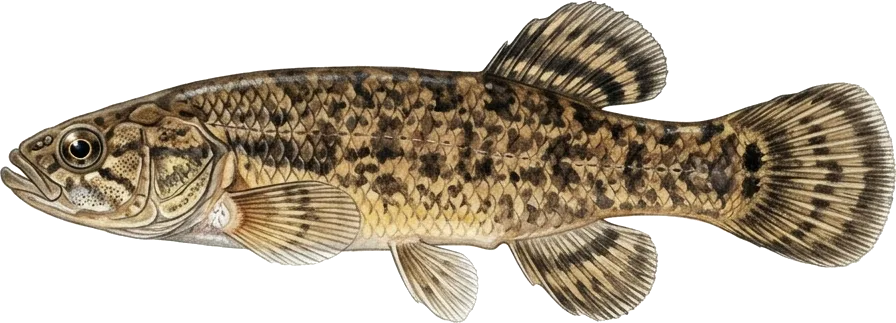
Mud Minnow Lake minnow (Rhynchocypris percnurus, or swamp minnow) is a resilient, cold-tolerant cyprinid fish thriving in peat bogs, oxbow swamps, and shallow tundra lakes of Eurasia. The species is characterized by a thick, mucus-rich body, dense scales, exceptional hypoxia tolerance during winter freezes, and weight up to 100 g. Caught on delicate whip tackle using small bloodworms.
Mud minnow angling requires featherweight finesse gear: 2.7–3.5m telescopic whip, ultra-fine 0.08–0.10mm mono, 0.3–0.5g goose-quill micro-float, fine-wire Owner Sode #18–22 hook, and a single ruby bloodworm or micro-pinky maggot.
- ✅ You want to definitively understand Rhynchocypris percnurus adaptations: anoxia survival in peat silt, heavy mucus defense, and freeze resistance.
- ✅ You want to master high-speed micro-float harvesting in overgrown peat quarries and woodland pools.
- ✅ You need top micro-baits: juicy bloodworms, single pinky maggots, bread flake dough, and steamed semolina.
- ✅ You want secrets to keeping minnows lively as indestructible live baits for trophy pike, zander, perch, and burbot.
- ✅ You want to master mud minnow mechanics and peat-marsh quests in 'Volga 2026'.
Ichthyology & Extreme Peat Wetland Adaptations: Profile of Rhynchocypris percnurus
Mud minnow (*Rhynchocypris percnurus*) is an extremophile cyprinid adapted to isolated, oxygen-depleted peat wetlands:
The body is plump and cylindrical with a thick caudal wrist and rounded fins. Minute cycloid scales are embedded in skin shielded by a thick antibacterial mucus coat resisting caustic peat humic acids.
Thrives in water with oxygen levels under 0.5 mg/L. When shallow pools freeze to the bottom in winter, minnows burrow into semi-liquid peat muck and enter dormancy, surviving sub-zero cooling.
Thanks to low metabolic demands and rugged skin, the minnow remains vigorously active on a predator rig for several days, triggering pike and perch with rhythmic vibrations.
Consumes cladocerans (daphnia), chironomid larvae (bloodworms), filamentous algae, and detritus. A school of minnows swarms any falling particle in a frenzy.
Mud Minnow vs Common Stream Minnow vs Weatherfish: Identification Guide
Comparative anatomical guide for three small benthic wetland species:
- Body: DEEP, PLUMP, robust (slightly humped back).
- Color: olive-golden sprinkled with fine dark specks.
- Fins: rounded, yellowish-grey, tail gently notched.
- Biotope: stagnant peat bogs, quarries, overgrown pools.
- Size: 5–12 cm (10–90g).
- Body: SLENDER, STREAMLINED, spindle-shaped.
- Color: bold dark vertical cross-bars along lateral line.
- Breeding dress: males boast crimson belly and pearl breeding tubercles.
- Biotope: FAST COLD STREAMS and gravel-bottomed rivers.
- Size: 6–10 cm (8–30g).
- Body: ELONGATED, SNAKE-LIKE, cylindrical.
- Barbels: 10 SENSORY BARBELS surrounding mouth.
- Color: yellowish-brown with wide dark longitudinal stripes.
- Respiration: intestinal (gulps air with audible squeak).
- Size: 15–25 cm (30–150g).
Mechanics of the Delicate Peat Bloodworm Take & Quick Retrieval
When the micro-bait touches down in a peat pool, minnows encircle the hook. A fish approaches the bloodworm, inhales the tip, and glides sideways. The 0.4g float gives 1–2 delicate micro-tremors ('antenna quiver') and smoothly slides 5–10cm beneath the dark surface.
Strike with a gentle wrist lift without violent force to avoid tearing fragile mouth tissue. On 0.08mm mono, the minnow flutters briskly and is swung to hand in a single second. When collecting live bait, place fish immediately into a shaded bucket packed with fresh water and a handful of sphagnum moss!
Seasonal Habitats: Peat Quarries, Moss Bogs & Woodland Pools
Mud minnow resides exclusively in closed stillwater biotopes over thick peat silt:
🌱 Spring (Sunlit Bog Shallows): Shoals gather in the shallowest 0.2–0.6m edges of peat drainage ditches. Biting is furious throughout the entire day.
☀️ Summer (Peak Live-Bait Season): Holds beneath floating sphagnum mats, lily leaves, and sunken timber (0.4–1.2m). Peak feeding: calm mornings and evenings.
🍂 Autumn (Deep Quarry Pockets): Concentrates inside 1.2–2.0m deepest quarry depressions. Takes micro-bloodworms during warm midday hours.
❄️ Winter (Silt Dormancy): Burrows into deep peat mud. Around open spring seeps, occasionally taken on winter micro-ice jigs.
Mud Minnow Baits: Bloodworms, Pinkies, Bread Dough & Clouding Groundbait
1. Natural Micro-Baits (Top Choice)
Single ruby bloodworm hooked through the head collar; one pinky micro-maggot; tiny 2–3mm segment of red earthworm.
2. Bread Paste & Semolina Dough
Match-head sized pinch of fluffy white bread crumb; tacky semolina paste lightly infused with vanilla.
3. Clouding Particle Feed
Finely ground breadcrumbs blended with powdered milk and crushed dried daphnia, creating an irresistible suspended cloud.
4. Peat Earth Blend
Damp local peat earth mixed with tiny joker bloodworms, dissolving on the bottom to anchor minnow shoals for hours.
Tackle: 2.7–3.5m Telescopic Whip, 0.08mm Mono, 0.4g Float & #20 Hooks
Targeting miniature mud minnows demands the ultimate lightweight and ultra-sensitive whip setup:
Compact Telescopic Carbon Whip 2.7–3.5m (Weight 80–100g)
Short, ultralight carbon pole with a solid carbon tip, dropping micro-baits with surgical precision between moss gaps.
Ultra-Fine 0.08–0.10mm Clear Monofilament
Weightless mono rigged straight through to hook, allowing a natural, uninhibited slow descent of a single bloodworm.
0.3–0.5g Natural Quill Float + Owner Sode #18–22 Hook
Miniature quill or balsa float shotted with a single #11–12 micro-lead split, paired with a 0.28mm fine-wire micro-hook.
Debunking Common Mud Minnow Myths
Fact: Stream minnow lives in rapids; the mud/lake minnow (*Rhynchocypris percnurus*) is an obligate resident of stagnant peat bogs and ponds.
Fact: Mud minnow is among the hardiest live baits on Earth, remaining vigorously active on a single hook for 2–3 full days.
Fact: Mud minnows burrow into bottom sludge and enter torpor, surviving total freeze-over and severe anoxia.
Scientific Research on Rhynchocypris percnurus
'The lake minnow inhabits peat bogs and shallow pools... It is distinguished by incredible tenacity and serves as superb live bait for pike and perch.'
'Rhynchocypris percnurus possesses anaerobic glycolysis mechanisms enabling survival at oxygen pressures below 0.2 mg/L. The epidermis features dense goblet cells secreting protective acidic mucopolysaccharides.'
'Rhynchocypris percnurus: maximum recorded weight 90–110g, length 12–15cm, lifespan 5–6 years. Characterized by high fecundity and fractional spawning on aquatic plants.'
4 Tactical Peat-Pool Strategies for Mud Minnow
Hook a single tiny bloodworm through the head on a fine #20 hook. Drop 10cm off the moss overhang—a take follows within 2 seconds!
Toss a pinch of breadcrumb and powdered milk mix. The white cloud pulls dozens of minnows into a tight feeding swarm directly beneath your pole.
Place collected minnows in a bait bucket packed with fresh sphagnum moss. Moss purifies water and keeps 100% of the live bait vigorous for days.
Spongy peat soil transmits vibrations directly into shallow water. Step softly and smoothly to avoid spooking the littoral shoal.
Seasonal Matrix: Depths, Optimal Times, Baits & Rigs
| Season | Peak Feeding Time | Depth Zone | Top Baits | Tackle System |
|---|---|---|---|---|
| Spring (Sunlit Shallows) | 09:00 – 18:00 (Full sunny day) | 0.2 – 0.6 m (Warm sunlit shallows) | Single bloodworm, micro-pinky | 3.0m Whip, 0.3g float, 0.08mm mono |
| Summer (Peat Quarry Mats) | 06:00 – 11:00 & 17:00 – 20:30 | 0.4 – 1.2 m (Under moss mats) | Bloodworm, semolina dough, bread | Ultralight whip, #20 hook |
| Autumn (Deep Pits) | 11:30 – 15:30 (Midday warming) | 1.2 – 2.0 m (Deep quarry pockets) | Juicy bloodworm on micro-hook | Whip with 0.5g sensitive float |
| Winter (Silt Torpor) | Torpor in bottom sludge | 1.5 – 2.5 m (Unfrozen sumps) | Micro winter ice-jig with bloodworm | Winter nodder rod |
Angling Diagnostic: Identify What's Impeding Your Mud Minnow Catch
Select the symptoms you are experiencing for instant technical adjustments:
Mud Minnow in 'Volga 2026' Simulator
In 'Volga 2026', mud minnow is simulated as hardy peat-pool micro-fish ('tiny peat-pool fish, but important as live bait') featuring delicate bloodworm takes, extreme hypoxia resistance, and massive utility as premier #1 live bait for pike, perch, and burbot. Weight spectrum spans 10 to 90 g. Inhabits peat quarries, moss bogs, and shallow sunlit oxbows.
Key in-game locations: 'Peat Quarry', 'Weedy Bay', 'Oxbow Pool', 'Volga Expanses'.
Mud minnow unlocks the live-bait and micro-float questline ('Golden Peat Live Bait', 'Pike Provisioning', 'Master of Fine Bloodworm'), unlocking ultralight whip blanks and aerated bait buckets.
Frequently Asked Questions About Mud Minnow
How does mud (lake) minnow differ from common stream minnow?
Mud minnow (*Rhynchocypris percnurus*) has a deeper, plumper body, rounded fins, and inhabits stagnant peat bogs. Stream minnow (*Phoxinus phoxinus*) is slender, striped, and lives in fast cold torrents.
Why is the mud minnow considered premier live bait for predators?
Due to rugged skin and extreme hypoxia tolerance, minnows stay actively moving on a hook for several days, reliably triggering pike, zander, and burbot.
What is the best bait for catching mud minnow?
A single fresh bloodworm hooked by the head on an Owner Sode #20 hook, or a single pinky micro-maggot.
How does the minnow survive when shallow peat bogs freeze solid in winter?
Minnows burrow 20–30cm deep into semi-liquid peat muck and enter dormancy, dropping metabolic rates to minimum levels until the spring thaw.
What maximum size does a mud minnow reach?
Mud minnow reaches 10–12 cm and up to 70–90 g (averaging 5–8 cm and 15–30 g), remaining a compact miniature fish.
Authoritative Ichthyological Sources & Literature: FishBase — Rhynchocypris percnurus Biological Summary · IUCN Red List of Threatened Species — Rhynchocypris percnurus · Л. П. Сабанеев — «Жизнь и ловля пресноводных рыб» (Викитека) · Институт биологии внутренних вод им. И. Д. Папанина РАН (ИБВВ РАН)
Prepared by the Volga 2026 Editorial Board in strict adherence to aquatic biology and sport angling standards. Volga 2026 Editorial Methodology.